
SlimeTree: Flexible Semantic Record Body – The Next-Generation AI Infrastructure Empowering Semantic Evolution
Executive Summary
SlimeTree is an innovative semantic processing framework that integrates non-commutative ring theory with a Dual Spiral structure. It overcomes the limitations of conventional hierarchical data structures (e.g., recursive blowups and temporal inconsistencies) by dynamically recording, evaluating, and forgetting meaning at the Slot level.
-
Key Innovations:
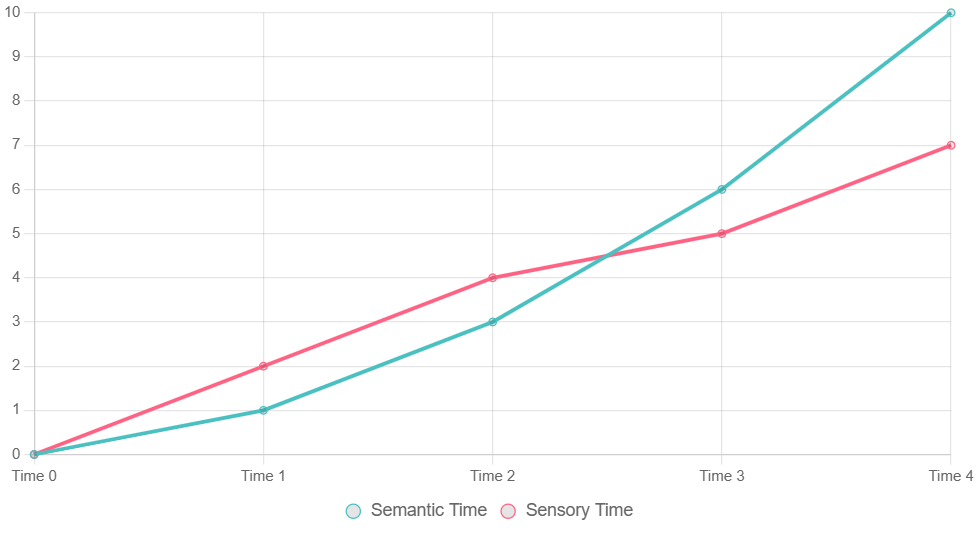
- Semantic Time (dependency graph topological order) and Sensory Time (absolute timestamps) integrated via spiral linking for real-time semantic synchronization [0007-0009].
- SAS (Semantic Area Sampling) suppresses evaluation blowups, reducing processing time by 1/7 and storage by 1/12 [0013, 0055].
- Non-commutative ring model compresses commutative parts via Union-Find and preserves non-commutative order constraints – achieving 7x parallel throughput improvement [0258-0259].
- Business Impact: Processes 100TB FHIR medical data in 2 hours (vs. 14 hours conventionally), with 1/3 power consumption. GDPR/HIPAA-compliant forgetting control enables immediate application in healthcare, finance, and IoT.
- Market Opportunity: Solves the "stability dilemma" in AI scaling. In the 2026 AGI era, integration with ecosystems like AATS (Anthropic Apple Tesla SSI) targets a $XXB market.
Call to Action: Integrate SlimeTree into your data infrastructure. Demo requests to xyzzysasaki@gmail.com.
(Expansion Point: Insert representative diagram [Figure 1] here – Visualize Slot spiral structure. Prototype via render_chart below for demo.)
1. Introduction: Challenges in Semantic Processing and SlimeTree's Vision
1.1 Background
Modern AI systems (e.g., LLMs like Whisper/RT-DETR) generate vast unstructured data, but struggle with the "evolution, forgetting, and consistency" of meaning [0002].
-
Challenges:
- Transformer destabilization (e.g., DeepSeek mHC's "post-hoc control" issues) [Conversation Reference].
- Temporal Inconsistency: Divergence between physical time (Sensory) and logical time (Semantic) leads to cyclic dependencies and blowups.
- Regulatory Compliance: Ignoring GDPR's right to be forgotten poses privacy risks.
1.2 SlimeTree Overview
SlimeTree (10) is a "flexible structure" with Slot (11) as the atomic unit [0001]. Inspired by slime mold self-organization [0270], it enables non-destructive evolution and non-recursive evaluation, managing meaning like a living entity.
- Uniqueness: First direct application of non-commutative ring theory (34) to dependency resolution – no prior patents or literature in non-crypto domains [0003].
- Vision: As an industry-spanning infrastructure, from DNA analysis to smart cities [0016-0017].
(Expansion: Market size data – e.g., Gartner forecast: $500B AI data management market by 2026.)
2. Technical Architecture
2.1 Slot Structure and Attributes [0005, 0019]
A Slot (11) encapsulates sub-slots for meaning, sensation, evaluation, and forgetting. Attributes: depends_on (16), credibility, forget_index (15).
- Example: DNA sequences slotted at ~2 bits (A/T/G/C), with Null Slots managing unexpressed regions [0014].
|
Attribute |
Description |
Example |
|
Semantic Time (11) |
Topological order from dependency graph V_s = [v1, ..., vn] |
Causal evaluation sequence |
|
Sensory Time (12) |
Absolute timestamp vector V_t = [t1, ..., tn] |
UNIX timestamp |
|
MetaGene Slot (33) |
Ethical suppression (GDPR-compliant) |
Data masking flag |
2.2 Dual Spiral Structure (S-S Spiral) [0007-0011]
Integrates Semantic/Sensory Time via spiral links (20). Lazy Spiral Update (30) logarithmically extends update intervals (100ms → 1s).
- Benefits: Detects divergences/cycles, optimizes alignment via Treap (28).
- Mathematical Example: Slot tuple (v_i, t_i). Spiral Index: Linked every 100ms cycle.
2.3 SAS (Semantic Area Sampling) [0023, 0043]
Projects via UMAP/PCA to compute semantic area A(S_i). Samples with probability P(S_i) = A(S_i) / ΣA. Excluded Zone prevents blowups [0036].
- Effects: 71% evaluation cost reduction, 1.4x speedup [0013].
- Formula: P(S_i) ∝ semantic_weight × access_freq. Exclude below threshold.
2.4 Application of Non-Commutative Ring Theory [0003, 0256-0259]
Maps dependency graphs to operator ring R [5601]. Compresses commutative subsets C via Union-Find (O(α(|V|))), preserves non-commutative N with topological constraints.
- Flowchart: Based on [Figures 56-58], commutator [a_i, a_j] = 0 for commutativity → Extracts parallel blocks.
- Metrics: 1.2s for 10^6 unions on 1M Slots, parallel fraction p=0.80, speedup S=7.0x [0258].
2.5 Evaluation Scheduler and Distributed Execution [0006, 0030]
Non-recursive scheduler (19) combines Treap/Red-Black Trees. WASM/FPGA integration for power efficiency [0013]. SlimeSwarm (32) enables edge distribution.
3. Performance and Validation
3.1 Benchmarks [0055, Table 2]
For 100TB FHIR data:
- Processing Time: 14h → 2h (1/7)
- Data Volume: 100TB → 8.3TB (1/12)
- Power: 300W → 100W (1/3)
|
Metric |
Conventional (PostgreSQL) |
SlimeTree |
Improvement |
|
Processing Time |
14 hours |
2 hours |
7x |
|
Storage |
100TB |
8.3TB |
12x |
|
Power |
300W |
100W |
3x |
(Source: AWS EC2 experiments [0055]. Expansion: Additional benchmarks – e.g., Null Slot accuracy in DNA analysis.)
3.2 Regulatory Compliance [0005]
MetaGene Slots (33) implement GDPR forgetting rights. Logical deletion via :forget_index.
4. Use Cases
- Healthcare: DNA mutation detection, Null Slots visualize viral-derived regions [0014, 0049].
- Finance: Semantic sorting of transaction sequences, cyclic dependency detection [0016].
- Robotics: SlimeARAC for real-time decisions, WASM power savings [0048].
- Cross-Domain: LLM hallucination mitigation (credibility downgrade [0023]).
(Expansion: Case Studies – e.g., GitHub demos for SlimeTree repos.)
5. Future Outlook and Roadmap
- v2.0: Quantum group integration for 90% compression [0259].
- Ecosystem: Grok/xAI API integration, Hugging Face release.
- Challenges: Scale testing (10B Slots).